

If you’ve ever posted a Reel and wondered whether anybody found it through Google (not the algorithm, not the hashtags, actual Google search), you’re about to get a real answer.
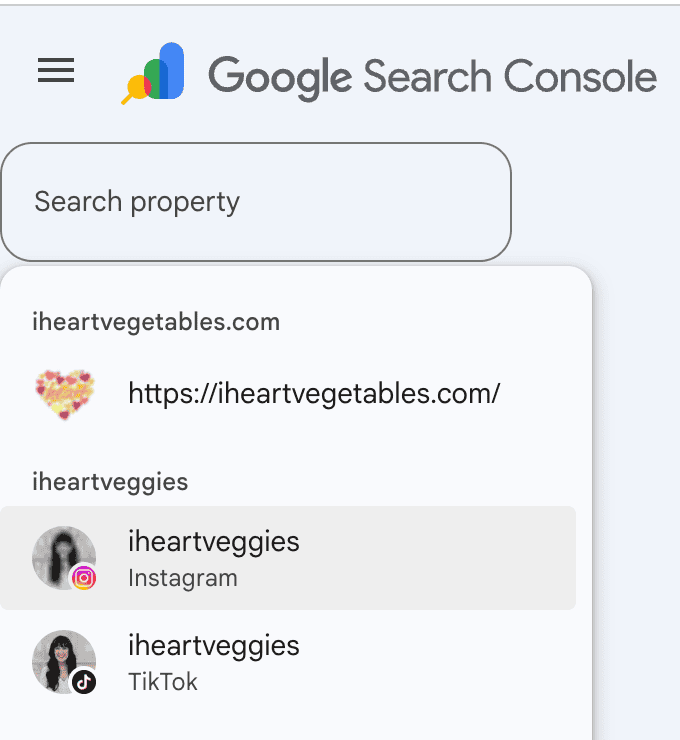
On July 7, Google rolled out a new Search Console feature called platform properties. Until now, Search Console was basically a website tool. You could see the exact searches that sent people to your blog, how often you showed up, your clicks, all of it. But if someone found one of your TikToks or YouTube videos through Google? There wasn’t an easy way to find it. The new platform properties finally make that data broadly accessible.
Here’s what it covers and what you should actually do with it.
How to Create Social Platform Properties
You can now create a Search Console property for four platforms: Instagram, TikTok, X, and YouTube. Once you verify that a profile is yours, Search Console starts showing you how Google sends people to your content there, across both Google Search and Google Discover (that’s the feed of articles and videos Google surfaces on your phone, so it’s a bigger deal than it sounds).
The setup is straightforward. In Search Console you open the property drop-down, click “Add property,” pick your platform, and follow the verification steps to connect the account. Google’s rolling this out gradually over the next few weeks, so don’t panic if it’s not in your account yet. It may take a couple of days before your data is in there.
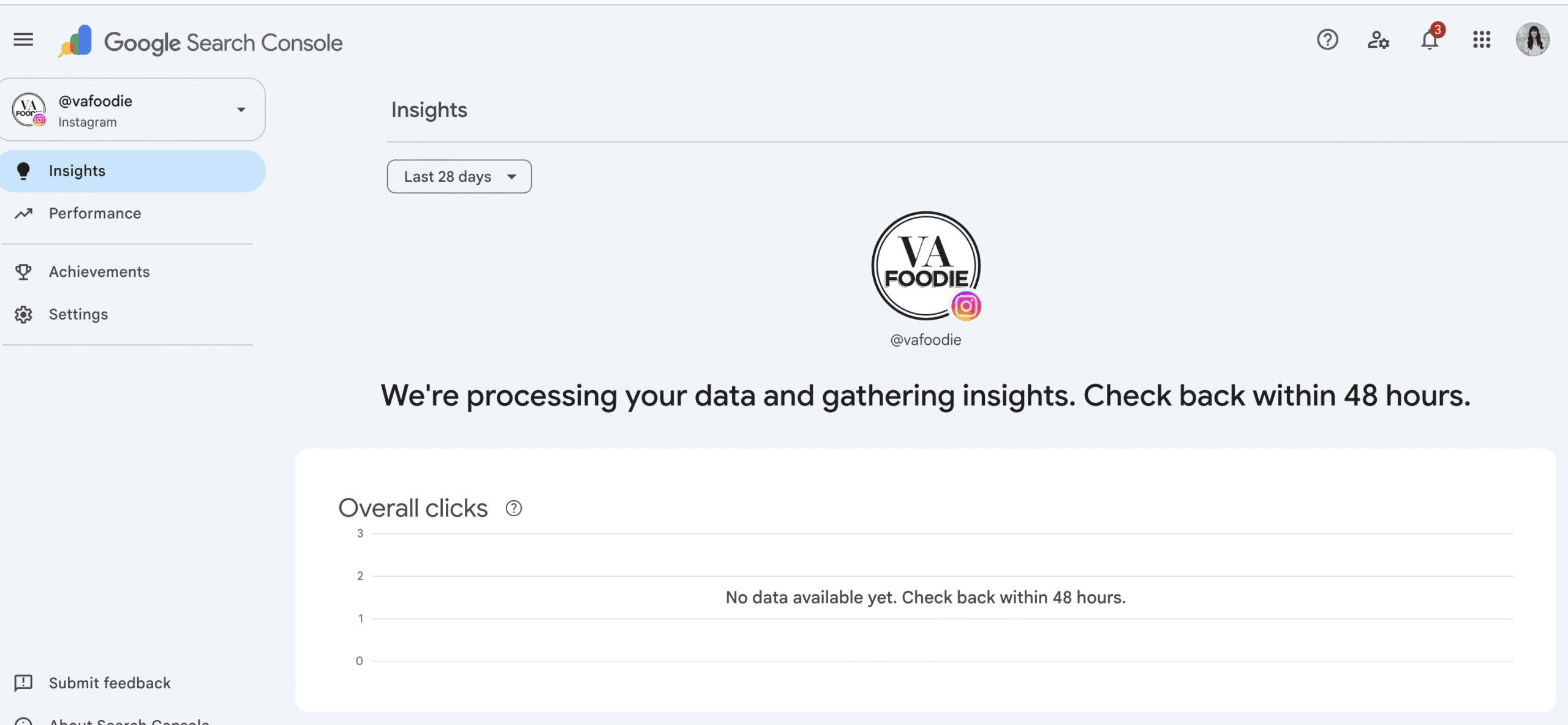
The part I keep coming back to: you don’t need a website for this. If you’re a creator who lives entirely on Instagram or YouTube, you now get real Google data on your content. That’s SO cool!
What you’ll actually see
Three reports, and they’re the same ones website owners have leaned on for years, just pointed at your social content instead:
- Performance report. Your total clicks and impressions from Google, plus the search terms people typed to land on your posts. You can filter and sort to see which specific posts and which queries pull the most traffic, and export it if you want to slice it somewhere else.
- Insights report. A friendlier overview of recent traffic patterns, your top-performing posts, and how people are finding your account on Google.
- Achievements. This one tracks milestones, like passing a new click threshold from Search inside a 28-day window. (It might sound a little silly, but for those of us who have been using GSC for a while, this is a standard thing.)
The query data is the gold here. Knowing the actual words people searched before they clicked your Reel tells you what to put in your next caption, title, or bio.
Why this is a bigger shift than it looks
For years, the story has been “social media is becoming a search engine.” But I think Google’s signaling that the reverse is true as well. Social content is becoming a much more important part of Search.
Think about what that means for how you treat a post. A Reel doesn’t have to die after 48 hours in the feed. If Google can surface it months later, then your tutorial, your Richmond coffee-shop roundup, your “best Charlottesville wineries” TikTok, all of that keeps working long after you hit publish. You stop making content only for today’s feed and start making it for tomorrow’s search too.
This also isn’t coming out of nowhere. Google tested a version of this back in December with social channels showing up in Search Console Insights. Platform properties is the grown-up version.
What I’d actually do about it
- Write captions a human could search. Google needs context, and a wall of emojis gives it nothing. Say what the video is about in real words, ideally in the first line.
- Make the topic obvious fast. Whether it’s your opening caption line or the first three seconds of the video, tell people (and Google) what they’re looking at. Ask yourself what someone would literally type into the search bar, then use those words.
- Lean into evergreen. How-tos, recipes, reviews, local guides, “where to eat in [town]” content, that’s the stuff that keeps getting found. If you’ve been sitting on the fence about YouTube, this update nudges it further into “worth it” territory, because now you’ll finally see the payoff in data.
- Connect it back to your website if you have one. The real advantage isn’t just the social data, it’s seeing your blog numbers and your platform numbers side by side and understanding how your whole presence fits together.
What this means for us in Virginia
Most of us here are running lean. You’re the photographer, the editor, the caption writer, and the person answering DMs at 11pm. So anything that tells you what’s actually working (instead of leaving you to guess) is worth paying attention to.
If you’re a food blogger, a travel creator, a maker, or a small business owner, this is another reminder that your content has a longer shelf life than the algorithm makes it seem. That Reel about a local bakery or a TikTok on the best wineries near Charlottesville can keep pulling in viewers through Google weeks or months out.
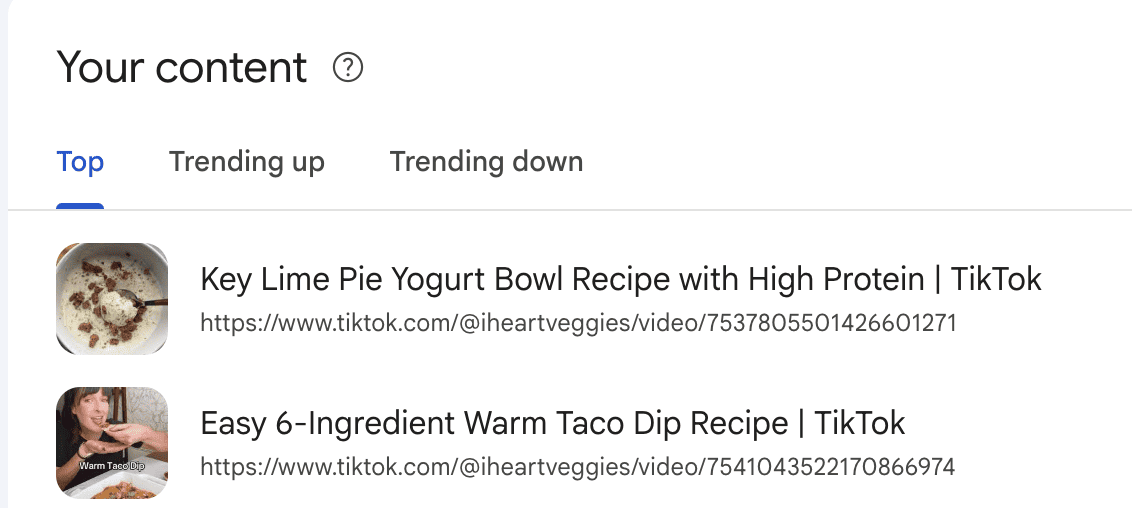
I was surprised to see that a peach recipe I posted on TikTok last year is still getting clicks today!
The bottom line
Platforms change. Algorithms will keep doing algorithm things. But useful, findable content keeps getting more valuable, not less, and now we’ve got better data to prove it.
Go check if platform properties has shown up in your Search Console yet. And if it hasn’t, keep an eye out over the next few weeks. This is one worth setting up!